
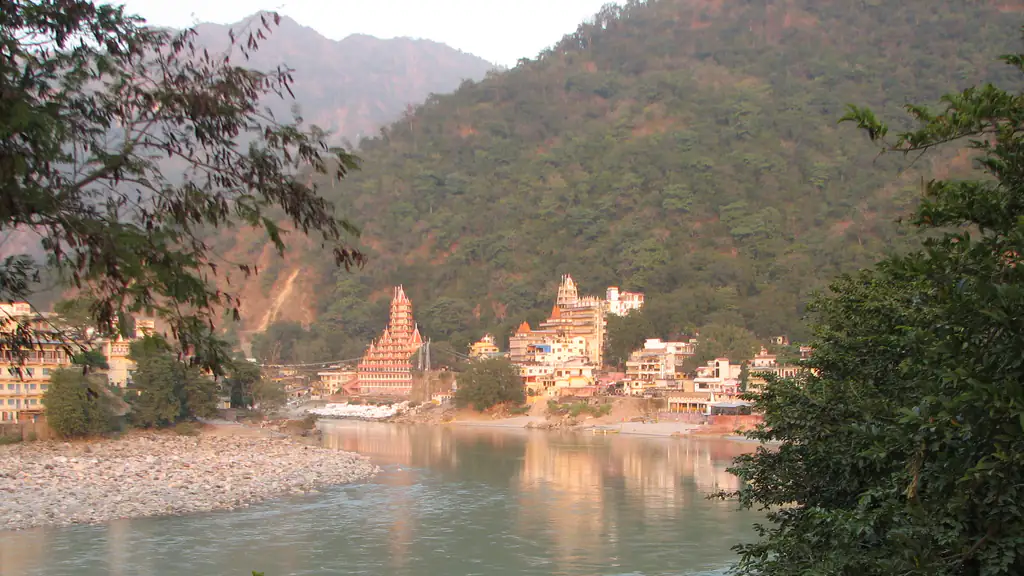
People often plan this trip as three hotels: one night in Dehradun, one in Mussoorie, one in Rishikesh. You spend every morning packing and every afternoon checking in. Dehradun sits between the other two, the hill above it and the river below it, so you can do all three from the valley and sleep in the same bed every night.
This page is the shape of the trip, not the small print. Fees, opening hours, rafting seasons, bridge closures and police traffic plans change often, and we keep them dated and sourced on each place’s own page. We link to those as we go. Read them the evening before each day.
What stays the same
- Mussoorie from Dehradun
- 38 km, the district administration says, and about 36 km from Dehradun railway station. Most of it is a winding hill road.District Dehradun: Mussoorie, checked 1 Nov 2026
- High points in Mussoorie
- Lal Tibba (Depot Hill) is the highest point, with Himalayan views on clear days. Gun Hill is the second highest, at 2,122 m by the district’s figure. Wikipedia gives 2,024 m. We go with the district.District Dehradun: Mussoorie, checked 1 Nov 2026
- How high Mussoorie is
- Mussoorie spreads along a ridge at a height of 2,000 m, Uttarakhand Tourism says. Dehradun is in the valley below it, and Rishikesh lower still, on the Ganga. Pack for both ends.Uttarakhand Tourism: Mussoorie, checked 1 Nov 2026
- Dehradun in January (IMD normals)
- Average high 19.7 °C, average low 6.6 °C, 43.5 mm of rain over 2.8 rainy days, and 1.7 fog days (1991–2020 normals).IMD climatological table, Dehradun, checked 1 Nov 2026
- Daylight, January 2027
- Sunrise 7:14 am on 1 January and 7:10 am on 31 January. Sunset 5:28 pm on 1 January and 5:53 pm on 31 January. Behind hills, and in valleys, the sun goes a little earlier.Sunrise-Sunset.org: Dehradun, January 2027, checked 1 Nov 2026
The shape of the trip: three nights
Check-in is from 2 pm and check-out is by 11 am. Three nights gives you an arrival afternoon, two full days, and a departure morning. We put Dehradun on the half-days, because its sights are close together and work in a few hours. The two full days go to Mussoorie and Rishikesh, because both need a proper start and a drive back.
- Day 1, Dehradun: arrive, check in from 2 pm, an evening in the old town.
- Day 2, Mussoorie: up early, Landour on foot, Mall Road, back down before dark.
- Day 3, Rishikesh: a slower start, the ghats and the bridges, home for dinner.
- Departure morning: check out by 11 am, one Dehradun sight on your way out.
Why the hill before the river? Mussoorie is the long, tiring day, and the one most at the mercy of weather and traffic. Do it while you are fresh, and keep Rishikesh as the day you can move. If the forecast is bad for the hill, swap days 2 and 3. Rishikesh is low and warmer, and a grey day there is still a good day.
Day 1: Dehradun
Morning, if you arrive early: the Forest Research Institute. The main building and its lawns are worth an hour or two with the bags still in the car. FRI sells entry by session and can shut at short notice, so check our FRI page for this month’s fees and closures.
Afternoon: check in. We meet you at the gate, show you the house, and go over the next two days with you: which day we’d go up the hill, and when we’d leave. Then sit in the courtyard for an hour. Tomorrow starts early.
Evening: Old Dehradun. Our Instagram bio says “Step into the slow, nostalgic charm of Old Dehradun”, and the Clock Tower and Paltan Bazaar in the late afternoon are where we’d start. The full route, with Darbar Sahib, is in our Old Dehradun heritage walk. On this trip, do the bazaar, eat early, and get to bed.
Day 2: Mussoorie
Leave early. We’d be on the road by about 7:30 am on a weekday, and earlier on a Saturday or Sunday. The road climbs from the valley to 2,000 m in a long run of bends, so give it more time than the distance suggests. Parking, buses, registration and the police traffic plans are all on our Mussoorie day trip page.
Morning: Landour on foot. Park once and walk up through Landour to Lal Tibba while the light is clear. It’s steep, so wear proper shoes and carry water. In January it can be much colder up here than in the valley, so bring the heavy jacket, a cap and gloves, even if Dehradun was mild when you left.
Afternoon: Mall Road, then down. Lunch and a slow walk on Mall Road. The district administration says Captain Young, a military officer, came to this ridge in 1827 and laid the town’s foundation. Other accounts put it at 1825. Start back by about 3:30 pm. In early January the sun sets around 5:30 pm, and earlier behind the hills, and we’d rather you did the bends in daylight.
What we’d skip: Kempty Falls. The district puts it 11 to 15 km out of Mussoorie, on the Yamunotri road. On a three-day trip it turns a full day into a very long one. Leave it for another visit.
If snow is why you’re going up, it doesn’t keep a timetable. See snow near Dehradun for how it tends to arrive, and keep this day loose.
Day 3: Rishikesh
A slower start. After the hill, take the morning easy. This is the day for our pahadi breakfast: mandua roti, aloo and seasonal fruit, ₹350 per guest, on request. Tell us the night before.
Late morning to afternoon: the ghats and the bridges. Walk the river between the ashrams and cross to the far bank. Rishikesh’s old footbridges have been shut for repairs at times, so which crossings you can use changes from season to season. Our Rishikesh day trip page has what’s shut, what’s not, and the dates we checked. Rishikesh is part of Dehradun district, and the road there stays low, with no long climb, but weekends bring heavy traffic and diversions. That page covers those too.
Rafting, if it’s on. The rafting season depends on the river. As of 27 September 2026, Hindustan Times reported that officials had halted rafting in Rishikesh indefinitely after continuous rain raised the Ganga. Book a licensed operator, confirm with them that morning, and read our Rishikesh page for this season’s status. We don’t suggest going into the Ganga outside a guided rafting trip. It is cold and fast, even where it looks calm. Stay on the steps, and keep children and dogs back from the edge.
The evening aarti, or home before dark. The Ganga aarti at Triveni Ghat is held at dusk. In January that means waiting until about 5:30 pm and driving back in the dark through evening traffic. Our plan has you starting back by about 4:30 pm instead. If the aarti matters most to you, give it the evening and plan the drive back with care, or see Haridwar for the Ganga Aarti as a separate outing on a longer stay. Don’t try to fit Rishikesh and Haridwar into one day on this trip. It becomes a day in traffic.
Departure morning
Check out by 11 am and pick one last sight on the way. Ours is Mindrolling Monastery. Its Great Stupa is 185 feet tall, in a two-acre garden, and it was inaugurated in 2002. After two days on the road, it’s a quiet last hour. If you have children with you, swap it for the Dehradun Zoo, and check its weekly closed day on our zoo page first.
Weekends, holidays and the monsoon
If your three nights include a Saturday, put Mussoorie on the weekday and Rishikesh on the weekend, or the other way round if the weather says so. Don’t put both on the weekend if you can help it. Mussoorie on a Saturday is a different place from Mussoorie on a Tuesday.
Rishikesh has hosted an International Yoga Festival every March since 1999. In 2026, the festival at Parmarth Niketan ran from 9 to 15 March. The 2027 festival is expected around March, not yet announced with dates when we checked on 1 November 2026. Check the festival’s own site before you plan around it, and expect the town to be busier that week.
In the monsoon, roughly July to September, hill roads around Mussoorie can close after landslides, and the river rises fast. Rain can stop things after the monsoon too: the rafting halt above came in late September. Check the official warnings the evening before and again in the morning, using our list in how to check roads and weather, and follow what IMD’s Dehradun centre and the district say on the day. Keep both day trips loose so you can swap or drop one.
What we’d leave out of three days
People ask us about Robber’s Cave and Sahastradhara. Both are fine half-days, but both mean water and wet shoes, and you already have a river day. Dhanaulti, Chakrata and Kunjapuri are all worth seeing, and each one wants its own day. Three days is enough for the valley, one hill and one river. Anything more and you spend it in the car. If you only have two nights, our 2-day Dehradun and Mussoorie plan drops Rishikesh.
Why one base in the valley
From Dehradun the hill is up one road and the river is down another, and you come back to the same courtyard each evening. The car stays parked in the courtyard, and there are heaters in winter and a full kitchen if you’d rather cook after a long day. On Instagram we wrote that “We help our guests to experience the best of local places.” On this trip that mostly means helping you pick which day goes where. Tell us your dates and we’ll tell you what we’d do.
Fyonli Nest has two bedrooms, the green room and the red room, each with a king bed. It sleeps 4 adults, or up to 6 guests with children aged 2–12, and dogs are welcome if you tell us beforehand. If you’re weighing up where to stay, we’ve compared the valley and the hill in Dehradun or Mussoorie. See the rooms and send us your dates.
Sources: District Dehradun: Mussoorie (distances, Lal Tibba, Gun Hill, Kempty Falls, Captain Young); Uttarakhand Tourism: Mussoorie (height); Mussoorie, Wikipedia (Gun Hill height, Captain Young’s date); Rishikesh, Wikipedia (district, Triveni Ghat aarti, yoga festival since 1999); Parmarth Niketan: International Yoga Festival 2026; International Yoga Festival; Hindustan Times, 27 Sep 2026 (rafting halted); IMD climatological table, Dehradun (1991–2020); Sunrise-Sunset.org: Dehradun, January 2027; Mindrolling: The Great Peace Stupa; IMD Meteorological Centre Dehradun: forecasts and warnings. Fees, timings, rafting status, bridge closures, parking and traffic plans are sourced on the linked place and trip pages.