
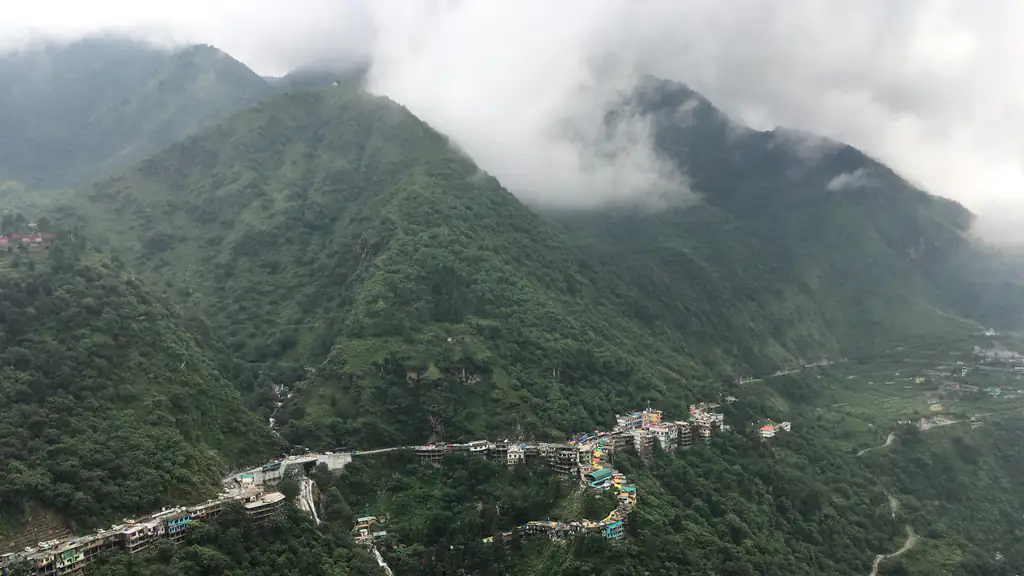
September 2027 at a glance
- Average high and low
- 30.1 °C by day, 21.3 °C at night (IMD normals for Dehradun, 1991–2020). Days stay as warm as August; nights are about two degrees coolerIMD climatological table, Dehradun, checked 1 Nov 2026
- Rain and thunder
- 305.9 mm over 12.0 rainy days in an average September (IMD normals, 1991–2020), against 714.9 mm in August and 38.3 mm in October; 11.6 days with thunderIMD climatological table, Dehradun, checked 1 Nov 2026
- Normal monsoon withdrawal
- 27 September for Dehradun, in IMD’s normal dates based on 1971–2019 (the older 1901–1940 normal was 21 September). Actual dates vary by a week or more either wayIMD, New Normal Dates of Onset and Withdrawal (2020), checked 1 Nov 2026
- Withdrawal in 2026
- IMD’s Meteorological Centre Dehradun announced the monsoon’s exit from the whole of Uttarakhand on Saturday 3 October 2026, six days after the normal date for Dehradun (Dainik Jagran reported the same on 3 October)News18 Hindi, 4 Oct 2026, checked 1 Nov 2026
- Daylight
- Sunrise 5:54 am on 1 September to 6:10 am on 30 September 2027; sunset 6:41 pm to 6:05 pm. Days shorten by 52 minutes over the monthSunrise-Sunset.org, Dehradun, September 2027, checked 1 Nov 2026
- Ganesh Chaturthi, 2027
- Saturday 4 September 2027; Ganesh Visarjan on Tuesday 14 SeptemberDrik Panchang: Ganesh Chaturthi 2027, checked 1 Nov 2026
- Pitru Paksha, 2027
- Purnima Shraddha on Wednesday 15 September; Pitru Paksha runs from the next day to Sarvapitri Amavasya on Wednesday 29 September 2027Drik Panchang: Amavasya Shraddha 2027, checked 1 Nov 2026
- Rajaji safaris
- As of 1 November 2026, the reserve’s website says the safari zones are closed for day visits from 16 June to 14 November; its tourist season runs 15 November to 15 JuneRajaji Tiger Reserve, Chilla zone, checked 1 Nov 2026
The weather: half the rain of August, and falling
September is the month the rain steps down in Dehradun. IMD’s 1991–2020 normals give it 305.9 mm of rain, less than half of August’s 714.9 mm, spread over about 12 rainy days instead of 22. October, by contrast, gets only 38.3 mm. So September is the step down from the wettest weeks of the year to the driest season.
With a normal withdrawal date of 27 September, the monsoon is usually still in place for the first three weeks, and the drier days come at the end. The days stay warm, with an average high of 30.1 °C, the same as August. The nights ease to 21.3 °C, which you notice after the sticky nights of July and August. IMD still counts about 12 thunder days in an average September, so a clear morning can end in a heavy evening shower.
The light changes too. On 1 September 2027 the sun sets at 6:41 pm; by 30 September it sets at 6:05 pm. That is more than half an hour less evening by the end of the month, which matters if you are planning a drive back from the hills.
When does the monsoon leave?
IMD does not declare the monsoon over in one go. It withdraws from the far west of Rajasthan first, never before 1 September, and the withdrawal line then moves east across the north over a few weeks. IMD looks for about five dry days in a row, drier air and a change in the winds before it calls it.
For Dehradun, IMD’s normal withdrawal date is 27 September, based on 1971–2019. Its own study puts the usual spread of these dates at about a week either side, so treat 27 September as a middle point, not a deadline.
What happened in 2026
2026 is a good example of how untidy the end can be. Dainik Jagran reported on 22 September that most of Uttarakhand was dry and sunny, with IMD saying conditions were right for the monsoon to leave parts of the state in the next two or three days. On 23 September the monsoon withdrew from Delhi, two days before its normal date and the earliest since 2002 (Hindustan Times).
Then a depression from central India moved north. As India Today reported on 27 September, IMD forecast heavy to very heavy rain at isolated places in Uttarakhand for that day, with isolated extremely heavy rain possible, while the monsoon was officially on its way out. The state’s formal goodbye came only on Saturday 3 October 2026, when the Meteorological Centre Dehradun announced the monsoon had left the whole of Uttarakhand. Even after that, the Met Centre forecast thunder, lightning and rain for parts of the state from 5 October as a western disturbance moved in (News18 Hindi, 4 October).
The lesson for September 2027: plan around the normal, but check the week you travel. As of 1 November 2026, the places to look are the IMD Dehradun forecast and the IMD district-wise warnings. Our roads and weather guide lists the rest.
Why we still take September rain seriously
A month with less rain is not a month without risk. On the night of 15 September 2025, cloudbursts hit the Sahastradhara and Maldevta side of Dehradun. Sphere India’s situation report of 17 September 2025 recorded 192 mm of rain at Sahastradhara and said 13 bodies had been recovered in Dehradun district, with 16 people missing across the affected districts. The Tamsa river flooded the courtyard of Tapkeshwar Mahadev temple, and schools in the district were closed on 16 September (Economic Times).
We are not telling you this to put you off. We are telling you because the places people most want to see in September, the streams and caves on the edge of the valley, are exactly the ones that rise fastest. If IMD has an orange or red alert out for Dehradun district, we would keep those for another day.
September 2027, week by week
| Dates | What’s happening | What it means for you |
|---|---|---|
| 1 – 15 Sep | Monsoon still in place | Showers likely on many days; check alerts before streams and hill drives. |
| Sat 4 Sep | Ganesh Chaturthi | A ten-day festival that ends with Ganesh Visarjan on Tue 14 Sep. |
| 16 – 29 Sep | Pitru Paksha | The fortnight many Hindu families set aside for shraddha rituals for their ancestors. |
| Around 27 Sep | Normal monsoon withdrawal date for Dehradun | In 2026 it came on 3 October. Watch IMD rather than the calendar. |
| Late Sep | Drier, clearer days in most years | Better odds for Mussoorie views and long walks. |
How we’d plan a September trip
- Choose the second half if your dates are flexible. The rain normally thins out through the month, and the last ten days are usually the better bet for clear mornings. Come early in the month and you get the valley at its greenest, with more showers.
- Do the city first, the hills on the clearest day. The Forest Research Institute and Mindrolling Monastery are good choices for a showery day. Keep a Mussoorie day loose, decide on the morning after checking the PWD Uttarakhand road closure report, and come down before dark.
- Keep streams for a dry spell, and stay out of the water. Sahastradhara, Robber’s Cave and Tapkeshwar all sit on streams that can rise within hours. Go after a few dry days, not on an alert day, and don’t step into the water.
- Skip Rajaji this month. As of 1 November 2026, the reserve’s website says the safari zones are closed for day visits from 16 June to 14 November. If a safari is the point of your trip, our Rajaji guide covers the season that starts on 15 November.
- Take the train if you can. Rain can still slow the roads in early September. Book on IRCTC and check running status on NTES on the day.
- Pack for warm days with showers. Cotton for the afternoons, an umbrella or a light rain jacket, shoes with grip for wet paths. Late-September evenings are milder than October’s, so a light layer is what we would pack.
After September, the weather turns. As we wrote on our Instagram on 8 October 2026, “Bring light jackets and enjoy pre winters.” If you can shift your trip by a few weeks, our best time to visit guide compares the months side by side.
Staying with us in September
Fyonli Nest has two bedrooms, the green room and the red room, each with a king bed, and a living room with an indigo arch for the afternoons a shower keeps you in. The courtyard catches the morning sun, which is welcome after a wet night, and there is parking there too. It sleeps 4 adults, or up to 6 guests with children aged 2–12. There is a full kitchen, fast Wi-Fi and a desk. A pahadi breakfast of mandua roti, aloo and seasonal fruit is ₹350 per guest per morning; tell us the night before.
We live ten minutes away and meet guests at the gate, and, as we say on Instagram, “We help our guests to experience the best of local places.” Ask us which outings fit the week’s forecast. Send your dates on WhatsApp or through the booking request on our stay page. We confirm on WhatsApp, there is no payment until we do, and cancellation is free until 7 days before arrival. Dogs are welcome too; just tell us beforehand.
Sources: IMD climatological table, Dehradun (1991–2020); IMD (2020): New Normal Dates of Onset/Progress and Withdrawal of Southwest Monsoon; IMD: withdrawal criteria; IMD Meteorological Centre Dehradun; IMD district-wise warnings; Sunrise-Sunset.org: Dehradun, September 2027; Drik Panchang: Ganesh Chaturthi 2027; Drik Panchang: Purnima Shraddha 2027; Drik Panchang: Amavasya Shraddha 2027; Dainik Jagran (22 Sep 2026): conditions favourable for withdrawal; Hindustan Times (23 Sep 2026): earliest withdrawal from Delhi since 2002; India Today (27 Sep 2026): heavy rain in Uttarakhand during withdrawal; Dainik Jagran (3 Oct 2026): monsoon leaves Uttarakhand; News18 Hindi (4 Oct 2026): Met Centre Dehradun announces withdrawal; Sphere India situation report (17 Sep 2025): Uttarakhand cloudburst; Economic Times (16 Sep 2025): Tapkeshwar temple flooded; Rajaji Tiger Reserve: Chilla zone; PWD Uttarakhand: road closure report; NTES; IRCTC.