
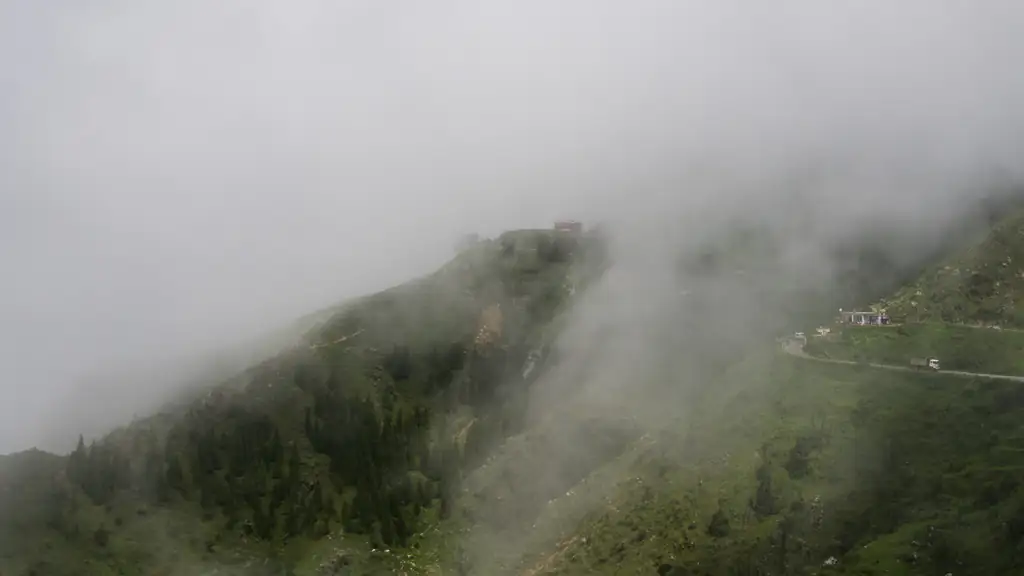
We’ll be plain about it. The monsoon is the season when Dehradun is at its greenest, and also the season when a plan made a week ahead is most likely to change. IMD’s own climate report calls Dehradun “one of the rainiest capital cities of India”. This page is about living with that, not pretending it away.
The monsoon at a glance
- Usual arrival and exit
- On IMD’s records the monsoon reaches Dehradun around 28 June on average and withdraws around 26 September. Onset has come as early as 10 June (2000) and as late as 29 July (1983); withdrawal as early as 11 September (1982) and as late as 12 October (1975).IMD: Climate of Dehra Dun, checked 1 Nov 2026
- Arrival in 2026
- Tuesday 30 June 2026, about 10 days later than usual for Uttarakhand. IMD said the northern limit of the monsoon passed through Dehradun that day.Moneycontrol (citing IMD and TOI), 1 Jul 2026, checked 1 Nov 2026
- Road closures logged, 2026 season
- 2,362 closure entries across Uttarakhand from 4 May to 1 Nov 2026; 2,090 of them began in July, August or September. 190 were in Dehradun district. 14 roads were still listed as closed on 1 Nov 2026, none in Dehradun district.PWD Uttarakhand: real-time road closure report, checked 1 Nov 2026
- Kanwar Yatra
- 2026: Thursday 30 July to Tuesday 11 August. 2027: expected around July–August with the month of Sawan, not yet announced.DD India (Uttarakhand Police briefing), 23 Jul 2026, checked 1 Nov 2026
- Delhi–Haridwar highway during Kanwar
- In 2026, NH-58 and the Ganga Canal Road in Muzaffarnagar district were shut to all vehicles from 4 to 12 August; police advised Delhi–Dehradun traffic to use the Delhi–Dehradun Economic Corridor.NDTV, 29 Jul 2026, checked 1 Nov 2026
- Harela
- 2026: Thursday 16 July. 2027: expected around 16–17 July, not yet announced.Lok Bhavan Uttarakhand press note, 16 Jul 2026, checked 1 Nov 2026
- Emergency numbers
- 112 for police, fire, ambulance and disaster help; 1070 for the State Emergency Operation Centre; 1077 for district emergency operation centres.Uttarakhand State Disaster Management Authority, checked 1 Nov 2026
Dehradun monsoon weather, June to September
These are India Meteorological Department (IMD) averages for Dehradun from its 1991–2020 climate normals. They describe a typical month, not the week you are coming.
| Month | Average high | Average low | Rainfall | Rainy days | Days with thunder |
|---|---|---|---|---|---|
| June | 34.1 °C | 23.2 °C | 231.1 mm | 10.3 | 13.0 |
| July | 30.6 °C | 23.6 °C | 621.6 mm | 20.5 | 16.6 |
| August | 30.1 °C | 23.1 °C | 714.9 mm | 21.6 | 15.4 |
| September | 30.1 °C | 21.3 °C | 305.9 mm | 12.0 | 11.6 |
Add those four months up and you get about 1,870 mm, out of about 2,160 mm in an average year. August is the wettest month, July a close second. Nights barely cool: lows stay around 23 °C until September. So expect warm, humid days, not cool ones.
A few things from IMD’s longer climate report that help with planning:
- Pre-monsoon showers start from mid-June, before the monsoon itself arrives. Daily highs are around 36 °C at the start of June and drop steeply from mid-June as those showers cool the air.
- The wettest stretch is 10 July to 20 August, when IMD puts the chance of rain on any given day at 50–60%.
- Storms prefer the afternoon and evening. Between 45% and 63% of monsoon thunderstorms come between noon and 9 pm.
- Rainfall drops sharply after about 19 September. By the end of the season the daily chance of rain is down to 10–20%.
- It can rain very hard. Dehradun’s heaviest 24-hour rainfall on IMD’s record is 487 mm, on 25 July 1966. Rainy days in July have ranged from 10 to 28 in different years, so one month can look nothing like the average.
Landslides and road closures
The valley floor mostly copes with rain as waterlogging and slow traffic. The hill roads are a different matter. The state Public Works Department logs every closure on its real-time road closure report. When we counted the 2026 season on 1 November, 2,090 of its 2,362 entries had begun in July, August or September. Most of the roads that reopened did so within a day, but some stayed shut for weeks, and you cannot know in advance which kind you will meet.
Some dated examples closer to home:
- 20 July 2026: after a red alert from IMD for Dehradun, part of the Dehradun–Mussoorie road sank near Kolhukhet, and the district administration closed it “till further orders”. The administration advised people to avoid unnecessary travel near rivers, streams and landslide-prone areas. The same report says seven people were rescued from an island in the river near Santla Devi when the water rose suddenly.
- 28–29 July 2026: the PWD report logs the Dehradun–Mussoorie state highway as closed from 4:03 am on 28 July until 11:17 am on 29 July.
- 15–16 September 2025: a cloudburst over the city’s outskirts flooded Sahastradhara, sent the Tamsa river over Tapkeshwar temple, and collapsed a bridge. The Mussoorie road was breached at several points and stayed shut for a second day, and PTI reported about 2,500 tourists stuck in Mussoorie. Police asked them to stay where they were until it was restored.
That last one came in mid-September, when many people assume the monsoon is winding down. It is a reason to treat the whole season, not only July and August, as rain season.
Rivers, streams and falls
Rivers and seasonal streams here rise fast after rain in the hills, sometimes when it isn’t raining where you are. Stay well back from the water’s edge, and don’t go into rivers or the pools at falls in this season. Our pages on Sahastradhara and Robber’s Cave say what the 2025 flood did to each. In the monsoon, we would skip both.
How to check before you go
We have a whole page on how to check roads and weather. The monsoon version is short:
- The evening before: look at IMD’s district-wise warnings for Dehradun and for the district you’re driving to, and at IMD’s Dehradun centre. An orange or red warning for heavy rain is a reason to move the hill day.
- The morning you drive: search the PWD closure report for the district and road name.
- Before a busy weekend or Kanwar: look for a traffic plan from Dehradun Police.
- On the road: stay off hill roads after dark, don’t stop under a slope that is shedding stones, and turn back if the rain gets heavy.
As of 1 November 2026, the PWD report listed 14 roads closed across Uttarakhand and none in Dehradun district. That number changes by the hour, so check it live on the day.
Kanwar Yatra (July–August)
In the month of Sawan, Shiva devotees called Kanwariyas travel to Haridwar and other places on the Ganga to collect its water and carry it back to offer at Shiva temples. It is one of the biggest pilgrimages in north India, and for about two weeks it reshapes traffic on the roads into Uttarakhand.
In 2026 the yatra ran from 30 July to 11 August. The Delhi–Haridwar highway (NH-58) and the Ganga Canal Road in Muzaffarnagar district were closed to all vehicles from 4 to 12 August, and police advised people driving from Delhi to Haridwar or Dehradun to use the Delhi–Dehradun Economic Corridor. NDTV reported that officials expected traffic on that corridor to rise by 25–30%, especially at weekends. Closer to us, Uttarakhand Police set parking and route plans for pilgrims going to Neelkanth near Rishikesh, with a diversion planned for when the Bin river was in spate.
For 2027, the dates follow Sawan and are expected around July–August, not yet announced. If you are driving from Delhi in that window, check the police plans a few days before, give yourself a lot more time, and avoid the final days of the yatra if you can. A Haridwar or Rishikesh day trip is one to save for another month.
Harela (mid-July)
Harela is Uttarakhand’s festival of greenery. It usually falls on 16 July, at the start of Shravan, and the custom is to plant saplings. On 16 July 2026, the Governor planted saplings at Lok Bhavan in Dehradun, and said Harela carries a message about protecting the environment. Harela 2027 is expected around 16–17 July, not yet announced.
For a visitor it is a quiet, local festival rather than a crowd event. It doesn’t change traffic the way Kanwar does. If you’re here that week, it is a nice moment to see what the monsoon means to people in these hills: the planting season.
How we would plan a monsoon stay
- Do outings in the morning. With most storms in the afternoon and evening, plan to be out early and back by lunch.
- Keep the hill day loose. Pick it the evening before, from the forecast, not a week ahead. Mussoorie can wait for a dry morning.
- Pair the valley with indoor places. The museums at the Forest Research Institute and a visit to Mindrolling Monastery make a good wet-day pairing. Check their timings on their own pages first.
- What we would skip: rivers, streams and falls; hill drives after dark; and any hill trip on the day before a train or flight.
- Pack for warm rain: a light rain jacket or umbrella, quick-drying clothes, shoes with grip, and something to keep a phone dry.
If the monsoon suits you, it suits a slow stay better than a sightseeing list, and a monsoon month can double as a workation. Fyonli Nest has fast Wi-Fi, a desk and a full kitchen, and our page on long stays and workations covers a monsoon month in more detail. In our own words on Instagram, “We help our guests to experience the best of local places”, and in the monsoon that mostly means helping you pick the right morning.
If your dates are flexible, see the rooms and send us a few options, or message us on WhatsApp. We live ten minutes away, so if the rain changes your arrival time, just tell us.
Sources: IMD climatological table, Dehradun (1991–2020); IMD: Climate of Dehra Dun; IMD Meteorological Centre Dehradun; IMD district-wise warnings; PWD Uttarakhand: real-time road closure report; Uttarakhand State Disaster Management Authority; Moneycontrol (1 Jul 2026): monsoon reaches Uttarakhand; Garhwal Post (Jul 2026): Doon–Mussoorie road closed; Business Today (16 Sep 2025): cloudburst in Dehradun; The Tribune / PTI (18 Sep 2025): 2,500 tourists stuck in Mussoorie; DD India (23 Jul 2026): Kanwar Yatra traffic plans; NDTV (29 Jul 2026): Kanwar Yatra road closures; Lok Bhavan Uttarakhand (16 Jul 2026): Harela; Harela, Wikipedia.