
Dehradun’s food, in facts
- Basmati GI
- Basmati rice is a registered Geographical Indication. APEDA received the certificate from the GI Registry, Chennai, on 15 February 2016. The growing region covers seven states, Uttarakhand among them.APEDA: Basmati Export Development Foundation, checked 1 Nov 2026
- Dehradun basmati fields
- An Uttarakhand Biodiversity Board study found traditional Dehradun basmati on 410.1 hectares (680 farmers) in 2018 and 157.8 hectares (517 farmers) in 2022. For the 2026 season, about 75 hectares and 160 farmers were reported.The New Indian Express, 26 Oct 2026, checked 1 Nov 2026
- Type-3 revival
- For 2026–27 the state Agriculture Department’s Type-3 revival programme covers 45 villages, 160 farmers and 75 hectares across Sahaspur, Doiwala, Raipur and Vikasnagar.The New Indian Express, 26 Oct 2026, checked 1 Nov 2026
- Litchi harvest
- The National Horticulture Board says litchi is usually harvested in May and June, and fresh fruit is available for about two months a year across India. At room temperature it browns within 2–3 days of picking.National Horticulture Board: Litchi, checked 1 Nov 2026
- Dehradun litchi
- The first export of fresh Uttarakhand litchi left Dehradun for Italy on 18 June 2026: one tonne. Varieties named: Rose Scented, Calcuttia and Bedana.PIB Dehradun, 19 Jun 2026, checked 1 Nov 2026
The bakeries and the rusks
If you grew up anywhere in north India, someone probably came back from Dehradun with a box of rusks. Baking here is older than most people think. A 2024 history piece traces it to the years after the Anglo-Gorkha war of 1814–15, when the valley came under the East India Company, whose English, Irish and Scottish men brought their baking with them.
The bakeries locals still queue at mostly date from later. The same history piece says two of the best-known opened in 1953, both started by men who came to Dehradun after Partition, and others followed later in the 1950s. One founder, an ex-army man, set up his shop to give work to bakers who had cooked for British officials’ households and found no place for their skills in Indian sweet shops after 1947, the Economic Times reported in July 2026. That is the root of the plum cakes, butter biscuits, “stick jaw” toffees and rusks people buy here today.
Bakers in the valley will tell you the taste of their yeast breads and rusks comes from the hard, limestone-rich water and the wood-fired bhattis. Nobody has proved it, and we won’t claim it. What we can say is that rusks here are baked twice, dry and crisp, and they keep for weeks in a tin, which is why they travel so well.
Our advice: buy rusks and biscuits on your last day, not your first, so they go home fresh. Bakeries bake early, so mornings usually have the best choice. If you see loose rusks sold by weight as well as packed boxes, try both.
Dehradun basmati: what the name does and doesn’t mean
“Dehraduni basmati” is the most famous thing the valley ever grew. The traditional variety, known as Type-3, was notified by the state Agriculture Department in orders of 1976 and 1978, selected from local Dehradun basmati seed. Its grains are long and slender, cook snow-white, and stay separate. It is the rice people here keep for pulao, biryani and wedding feasts.
Two things are worth knowing before you buy any. First, the Geographical Indication. Basmati as a whole is a GI, held by APEDA, the government’s farm-export body. Under the 2016 certificate, according to a 2021 government press release, 77 districts of seven states are counted as the basmati-growing region, and Uttarakhand is one of them. So the GI protects the word “basmati”. It does not certify that a bag is the old Dehradun Type-3.
Second, there is very little of the old rice left. Fields that once grew it on the city’s edges are now housing colonies. A farmer told the Times of India in 2024 that the Seola–Majra belt, once a main growing area, had turned into a “concrete jungle”. The farming that survives is in villages around Sahaspur, Doiwala, Raipur and Vikasnagar, and the state is trying to revive it with seed banks and certification. The figures are in the box at the top of this page.
Our advice: if you want to take rice home, ask whether it is Type-3, who grew it, and where. A sack labelled only “Dehradun basmati” with no grower or village on it tells you very little. Then cook a pot here first. The Nest has a full kitchen, and a plain jeera pulao is the best way to judge a rice.
Litchis: a few weeks in early summer
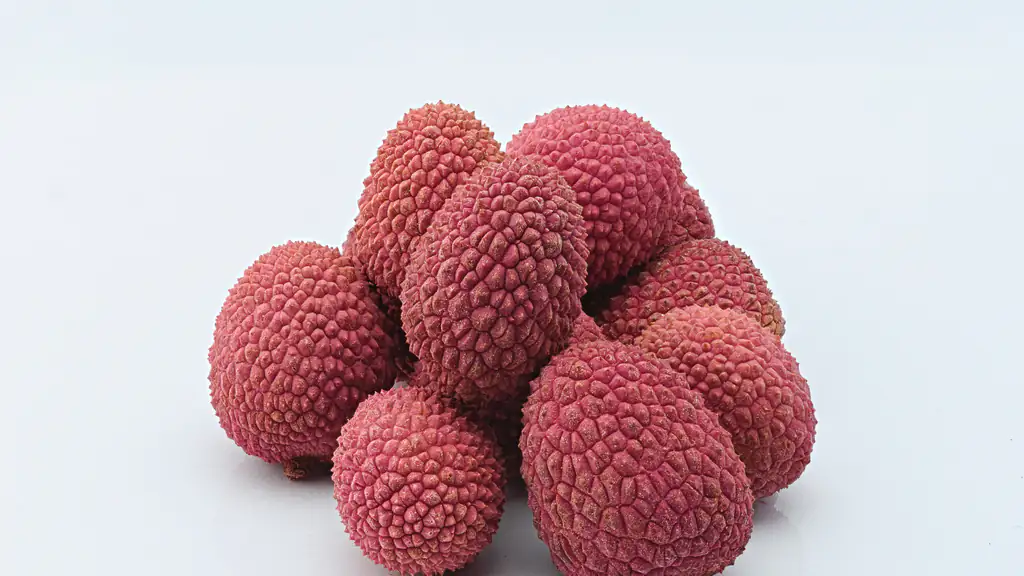
Litchis are the third thing on most lists. Litchi reached India through Myanmar and the north-east in the 18th century, according to the National Horticulture Board, and Dehradun has long been known for its litchis. The same 2024 history piece notes that litchi growing, like basmati, has declined a lot here, but the fruit is still grown in the district. In June 2026 the first export of fresh Uttarakhand litchi to Italy was shipped from Dehradun, and PIB described the local fruit as known for its sweetness, red colour and aroma.
The season is short. Nationally, the NHB says the harvest runs through May and June, about two months in all. We’d expect Dehradun’s 2027 litchis around June, not yet announced; for reference, the 2026 export left on 18 June. The NHB also notes that prolonged rain at flowering time can hurt a crop, so check what is in the market before you plan around it. If you are coming in winter, any litchis you see are not from Dehradun’s orchards, so we wouldn’t buy them as a souvenir.
Our advice: litchis don’t keep. The NHB notes they lose their red colour and brown within two to three days of picking at room temperature. Buy what you will eat that day or the next, keep them cool, and don’t plan to carry a crate home on a long drive in June heat.
Street food: what to look for
We don’t name stalls here. They change, and every Dehradun family has its own favourite and will argue about it. Instead, here are the kinds of things to look for when you are walking around the city.
- Bun tikki and bun samosa. A soft bakery bun with an aloo tikki or a samosa inside, chutneys and onion. It is the bakery town and the chaat stall meeting in one snack.
- Momos and thukpa. Dehradun has a long-settled Tibetan community, and steamed momos with a sharp red chutney, or a bowl of thukpa, are everyday food here, especially on a cold evening. Our Mindrolling Monastery guide covers the area around it.
- Chaat. Aloo tikki, gol gappe, chole and papdi chaat, the north Indian staples. Go where locals are queuing, and eat it hot.
- Bakery counters. Patties, cream rolls and dry cakes. Many bakeries also sell savoury snacks by the piece, which make a good lunch on a walking day.
- Hill food. Mandua (finger millet) rotis, local pulses and seasonal greens are home food more than street food. Our Garhwali food guide explains the dishes to ask for.
The old bazaar streets around the Clock Tower are the obvious place to start a food walk, and they pair well with the sights. Our Old Dehradun heritage walk goes through them. The lanes are narrow and get crowded, so we’d go on foot or by auto rather than drive in.
Cooking local produce at the Nest
Much of what Dehradun is famous for is best eaten at home: rice cooked properly, fruit eaten the day it is bought, rusks with your own chai. Fyonli Nest, our two-bedroom homestay, has a full kitchen for exactly this. If you want to try pahadi food without cooking, we make a pahadi breakfast on request: mandua roti, aloo and seasonal fruit, ₹350 per guest per morning. Tell us the night before.
We live ten minutes away and meet guests at the gate. On our Instagram we say, “We help our guests to experience the best of local places.” Ask us what is in season when you arrive. See the rooms and the kitchen.
Sources: APEDA: Basmati Export Development Foundation (GI certificate, 15 Feb 2016); IP India GI Registry: Basmati, application 145; PIB (10 Nov 2021): 77 districts of seven basmati states; The New Indian Express (26 Oct 2026): The fading fragrance of Dehradun Basmati; Times of India (24 Jan 2024): 62% dip in Dehradun basmati acreage; PIB Dehradun (19 Jun 2026): first export of Uttarakhand litchi to Italy; National Horticulture Board: Litchi; Economic Times (2 Jul 2026): Dehradun’s 1953 bakery; Enroute Indian History (2024): Baking through time in Dehradun.