
Chandigarh–Dehradun at a glance
- Himachal entry toll (cars)
- ₹100 per day for passenger vehicles up to 12+1 seats registered outside Himachal, for 2026–27 (to 31 March 2027). The State Taxes & Excise order of 31 March 2026 cut it from the ₹130 in the February toll policy. On 1 April 2026 The Tribune found some barriers still charging ₹170, and some websites still list ₹130 or ₹170. We go by the official order.HP State Taxes & Excise order, 31 March 2026, checked 1 Nov 2026
- Toll barrier on the Paonta road
- Kala Amb, in Sirmaur district, is a listed toll barrier (Kala Amb unit) in Himachal’s 2026–27 toll policy.HP Toll Policy 2026–27, checked 1 Nov 2026
- How the toll slip works
- Toll is charged only on entering Himachal, not on leaving, and only at the first barrier of entry. The receipt is valid for 24 hours throughout the state (2026–27 policy).HP Toll Policy 2026–27, receipt conditions, checked 1 Nov 2026
- Distances on the Paonta road
- Himachal Tourism puts Paonta Sahib about 120 km from Chandigarh and about 45 km from Dehradun, so roughly 165 km in all. Yamunanagar is about 60 km from Paonta.Himachal Tourism: Paonta Sahib, checked 1 Nov 2026
- UTC buses
- Uttarakhand Transport Corporation lists a Dehradun ISBT–Chandigarh Sector 43 route via Paonta Sahib, and a Dehradun ISBT–Chandigarh Sector 17 route via Saharanpur.UTC Online: routes, checked 1 Nov 2026
- ISBT enquiry lines (CTU)
- ISBT Sector 43: 0172-2624403. ISBT Sector 17: 0172-2700006. Both listed for long-route buses.Chandigarh Transport Undertaking: contact, checked 1 Nov 2026
Two ways to drive
Chandigarh and Dehradun sit at either end of the Shivalik foothills, and the road between them has to get round the Yamuna somewhere. You can cross it at Paonta Sahib, inside Himachal, or further south near Saharanpur, in UP. Both work. Which is better depends on where in the Chandigarh tricity you start, the day of the week, and whether you mind paying the Himachal entry toll.
Via Nahan and Paonta Sahib (the shorter way)
This is the shorter road from Chandigarh, Panchkula and Mohali. You head out through Panchkula towards Naraingarh, enter Himachal at Kala Amb, go past Nahan, and come down to Paonta Sahib on the Yamuna. Cross the bridge and you are in Uttarakhand, at the western end of the Doon valley, with Dehradun ahead.
On Himachal Tourism’s figures it is about 120 km to Paonta and another 45 km to Dehradun. The stretch around Nahan winds through low hills, so it’s slower than the distance suggests. Allow for that, and for town traffic at Kala Amb and Paonta.
The Himachal entry toll. Because the road passes through Sirmaur district, cars registered outside Himachal pay the state’s entry toll at the barrier. This is separate from any NHAI FASTag tolls. For the 2026–27 year the official rate for passenger vehicles up to 12+1 seats is ₹100 per day or part of a day, after a revision on 31 March 2026. Reports that spring quoted ₹170, then ₹130, before the 31 March order set ₹100, so you will still see older figures quoted. The policy says you pay only when entering Himachal, so there is nothing to pay at the Paonta end on the way out. Ask for a slip at the barrier and keep it: it is valid for 24 hours across the state. Himachal’s policy runs by financial year, so the 2027–28 rates, from 1 April 2027, are expected around February or March and have not been announced yet. Check hptax.gov.in before a spring trip.
Via Yamunanagar and Saharanpur (stays out of Himachal)
If you’d rather not cross into Himachal at all, go south through Haryana to Yamunanagar, on to Saharanpur in UP, and then north to Dehradun. From the Saharanpur side you can join the new Delhi–Dehradun Economic Corridor, which crosses the Shivaliks on an elevated road over the Rajaji forest and comes down into Dehradun at Asharodi, on the southern edge of the city. We cover that stretch, its tolls and its recent notices on our Delhi to Dehradun page.
It is the longer way round, and it usually means NHAI tolls in place of the Himachal one. It makes more sense if you’re starting from Ambala or the south of the tricity, if the Nahan road is closed after rain, or if you are arriving at night and want the wider road.
Uttarakhand’s green cess
Uttarakhand has also been bringing in a green cess on private vehicles from other states. In February 2026, ETV Bharat reported that it would be collected by number-plate cameras at 15 border points, at ₹80 for a light private vehicle, with electric and CNG vehicles exempt. We could not find an official notice confirming exactly which crossings were live by the time we checked, so we have left it out of the box above. The Transport Department posts its orders on its notifications page, and the latest one there on green cess rates is dated 27 May 2025.
A stop at Paonta Sahib
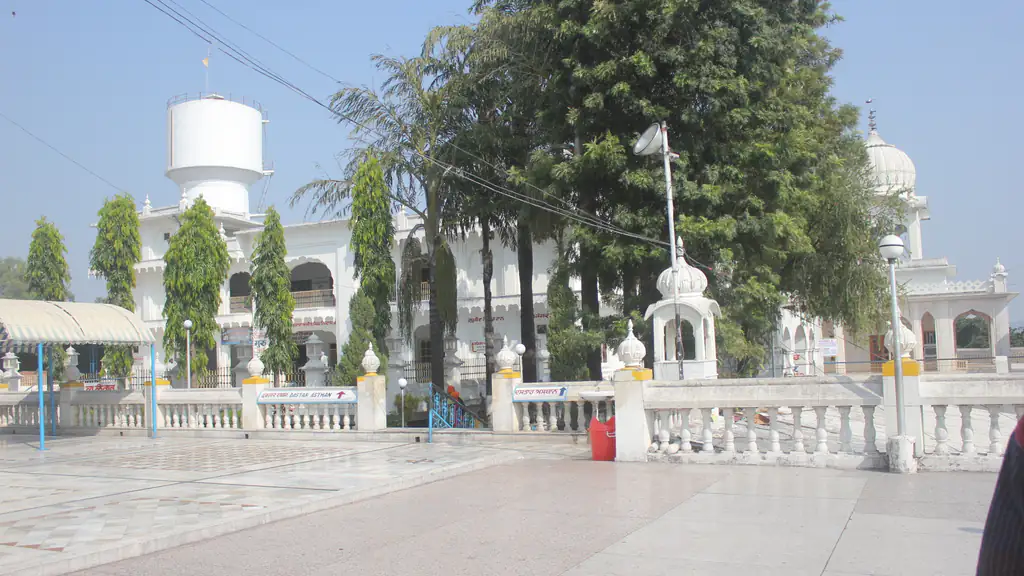
Paonta Sahib is the natural halfway break, and the gurdwara on the riverbank is worth the hour. Himachal Tourism’s page says Guru Gobind Singh, the tenth Sikh Guru, came to the princely state of Sirmaur at the invitation of its ruler and laid the gurdwara’s foundations here, and that he lived here for about three years. Sikh Dharma International gives the dates as 1685 to 1689, so accounts differ a little. Sikh accounts link much of the Dasam Granth to the Guru’s time here.
Inside, Himachal Tourism lists a gold palanquin, the Shri Talab Asthan and Shri Dastar Asthan, and a museum with weapons and pens used by the Guru. The Kavi Darbar, where poetry gatherings are held, is nearby. The gurdwara serves langar, so a meal stop here is easy. Himachal Tourism also lists temples to Rama and Krishna nearby. Cover your head, take your shoes off, and leave time to sit by the river. The Hola and Baisakhi fairs here, in March and April, bring big crowds and slow traffic through the town.
The Yamuna at Paonta looks quiet but can run fast, especially in the monsoon. Look at it from the ghats and the gurdwara terrace, and don’t go into the water.
By bus: ISBT 43 or ISBT 17
Chandigarh has two interstate bus terminals, and it matters which one you go to. The route list on UTC Online shows the split:
- ISBT Sector 43, via Paonta Sahib. UTC lists a Dehradun ISBT–Chandigarh Sector 43 route via Paonta Sahib, plus longer routes from Sector 43 to Rishikesh, Srinagar (Garhwal) and Tanakpur on the same road.
- ISBT Sector 17, via Saharanpur. UTC lists a Dehradun ISBT–Chandigarh Sector 17 route via Saharanpur, and several Sector 17 routes to Kumaon and Garhwal on the same road.
Both end at Dehradun ISBT. We haven’t listed times, because they change. Book UTC on UTC Online and ring the CTU enquiry lines in the box above if you need to know which counter or bay.
By train
We haven’t named a train here, because services change. If you want to go by rail, look up trains between Ambala Cantt or Chandigarh and Dehradun on NTES and book on IRCTC. For most people from the tricity, the bus or the car is simpler.
Rain, fog and the Nahan hills
The Paonta road crosses low hills and several seasonal streams. In the monsoon, from July to September, these can bring slips and washed-out patches, and IMD issues district-level heavy-rain warnings for both states. Look for current notices before you leave; our guide to checking roads and weather lists the official places to look. If the Nahan road is closed, the Yamunanagar–Saharanpur route is the way round.
In winter the Haryana plains get fog in the early morning, especially from late December into January. On those days we would start once it has lifted, not before dawn.
Our advice for the drive
- Make Paonta your break, not Nahan. It comes at a good point in the drive, and the gurdwara and riverbank make it a proper stop.
- Top up your FASTag before you leave. The NHAI plazas on the Saharanpur side need it. Himachal is bringing FASTag to its own barriers in phases: the 2026–27 policy names six barriers for the first phase, and Kala Amb is not one of them, though some reports said FASTag was mandatory everywhere. Where a barrier is FASTag-enabled, the policy adds 25% for vehicles without one. Keep the toll slip either way.
- Arrive in daylight if you can. Check-in is from 2 pm, so there is no need to leave at dawn. Start after breakfast, take your break at Paonta, and aim to be off the hill roads before dark.
- Send us a rough arrival time on WhatsApp once you are on your way. We live ten minutes away and meet you at the gate, and there is parking in the courtyard.
- Bringing your dog? Dogs are welcome. Just tell us beforehand.
- Leave the hills for tomorrow. After the drive, an evening in is better than heading on to Mussoorie. It will still be there in the morning.
If you’re still deciding where to stay, see the house and check your dates. It has two bedrooms, sleeps 4 adults, and has a full kitchen for the first evening after the road.
Sources: HP State Taxes & Excise (31 March 2026): Revision of Toll Rates for 2026–27; HP Toll Policy 2026–27; Indian Express (19 February 2026): HP notifies new toll policy; ANI (31 March 2026): passenger vehicle rate cut to ₹100; The Tribune (1 April 2026): barriers still charging ₹170; Sikh Dharma International: Paonta Sahib, 1685–1689; Himachal Tourism: Paonta Sahib; UTC Online: routes; Chandigarh Transport Undertaking: ISBT enquiry numbers; ETV Bharat (8 February 2026): Uttarakhand green cess; Uttarakhand Transport Department: notifications; NTES.