When is the Jhanda Mela in 2027?
The mela doesn’t have a fixed date on the English calendar. It follows the Hindu one. The flag goes up on Chaitra Vadi Panchami, the fifth day after Holi, which the Darbar Sahib celebrates as the birthday of Guru Ram Rai. The mela then carries on until Ram Navami.
Holi 2027 is a little untidy. Drik Panchang gives the day of colour as Monday 22 March, while the central government’s 2027 holiday list for Delhi offices is reported to give Tuesday 23 March. The date that matters is the Panchami itself, and Drik Panchang puts Chaitra Krishna Panchami (Ranga Panchami) on Saturday 27 March 2027. So the 2027 flag day is expected around Saturday 27 March, not yet announced. The Darbar Sahib announces the date, and the local papers carry it. We’ll update this page when it does.
The last three years show the pattern. In 2024 Holi was on 25 March and the flag went up on 30 March. In 2025 Holi was on 14 March and the flag went up on 19 March. In 2026 Holi was on 4 March and the flag went up on Sunday 8 March, the same day Drik Panchang gave for that year’s Panchami.
Jhanda Mela 2027: key dates
- Flag day 2027
- Expected around Saturday 27 March 2027, not yet announced by the Darbar Sahib. The flag goes up on Chaitra Vadi Panchami, the fifth day after Holi; Drik Panchang puts that Panchami on Saturday 27 March 2027Drik Panchang: Ranga Panchami 2027, checked 1 Nov 2026
- Holi 2027
- Monday 22 March 2027 (Holika Dahan Sunday 21 March) by Drik Panchang. The central government list for Delhi offices is reported to give Tuesday 23 March. Either way, the flag-day Panchami falls later that weekDrik Panchang: Holi 2027, checked 1 Nov 2026
- How long the mela runs
- From flag day to Ram Navami, which is Thursday 15 April 2027Drik Panchang: Rama Navami 2027, checked 1 Nov 2026
- Flag day 2026
- Sunday 8 March 2026: the old flagpole came down from 7 am and the new one, 94 ft high, went up between 2 pm and 4 pm. The mela ran to 26 MarchTimes of India, 8 March 2026, checked 1 Nov 2026
- Nagar Parikrama 2026
- Tuesday 10 March 2026, two days after flag day, with road diversions across the old cityLive Hindustan, 9 March 2026, checked 1 Nov 2026
What happens on flag day
The flag is not a cloth on a short pole. It is a tall tree-trunk flagpole, replaced every year. In 2026 the new pole was 94 feet high, and the sangat, the groups of devotees, carried it to the Darbar Sahib on their shoulders two days before the ceremony.
On the day, work starts early. In 2026 the old pole was lowered from 7 am, and the new one was raised in the afternoon, between 2 pm and 4 pm. The raising is led by the Mahant of the Darbar Sahib. Before it goes up, it is dressed in layers of cloth called gilaaf. The mela committee describes three kinds: 41 plain gilaafs on the inside, 21 velvet ones over them, and a single darshani gilaaf on the outside. In 2024 a devotee from Punjab offered the darshani gilaaf.
Sangats arrive from Punjab, Haryana, Uttar Pradesh, Rajasthan, Himachal Pradesh and beyond, many of them a week ahead. In 2025 the Garhwal Post described devotees packed from Saharanpur Chowk to Jhanda Bazaar for the raising. Bhandaras are set up along Saharanpur Road. In 2024 the paper counted eight large and four small langars inside the Darbar complex alone.
Two days after flag day comes the Nagar Parikrama, a procession through the city. In 2026 it left the Darbar Sahib and went by Saharanpur Chowk, Kanwali Road, Tilak Road, the Clock Tower (Ghantaghar) and Paltan Bazaar before returning. If you want to see the city turn out without standing in the courtyard crowd, the parikrama is the one to watch.
The Darbar Sahib and Guru Ram Rai
Guru Ram Rai was the eldest son of Guru Har Rai, the seventh Sikh Guru. The Darbar Sahib says he set up his dera, his camp, in the dun, the valley, in 1676, and that “Dera Dun” became Dehradun. That is why this mela matters to the city in a way no other festival does. It marks the first settlement here.
The emperor Aurangzeb asked Fateh Shah, the Raja of Garhwal, to help Guru Ram Rai, and villages in the Doon were granted to support the Darbar. Guru Ram Rai died in 1687. His wife, Mata Punjab Kaur, ran the Darbar after him and started the line of Mahants who still lead it. The present Mahant, Devendra Dass, is the tenth.
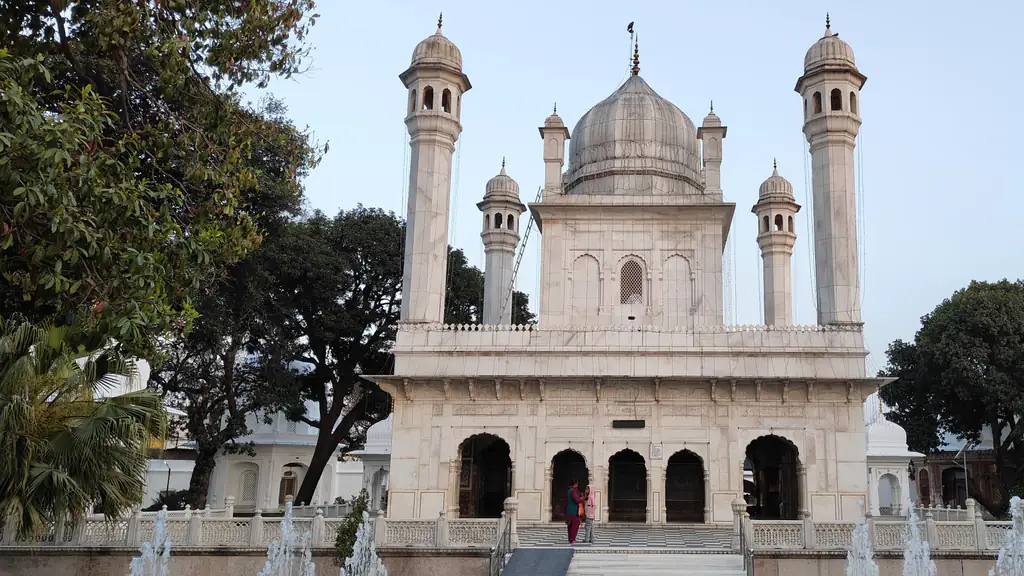
The building is unusual for a Sikh shrine. It has minarets, domes and a small Mughal-style garden, and its walls carry old murals in Mughal, Rajasthani and Pahari styles. The Darbar dates the present building to 1707; the Wikipedia account, citing a book on Uttarakhand’s architecture, puts the central complex at 1699 and the rest of the work at 1703–06. Either way, it is more than 300 years old. In front is the sacred tank, about 230 by 80 feet, which the Darbar has restored.
On an ordinary morning the Darbar is far calmer. If you’d rather see it that way, our Old Dehradun heritage walk starts there.
Traffic and roads around flag day
Every year the Dehradun traffic police issue a diversion plan a day or two before the flag goes up. The 2027 plan isn’t out yet. Last year’s is the best guide to what to expect. As of 6 March 2026, Amar Ujala reported the police plan for 8 March:
- A “zero zone” around the Darbar Sahib on flag day: no vehicles of any kind towards it.
- No cars or two-wheelers from Bindal towards Tilak Road and the tank.
- No vehicles from Saharanpur Chowk, or from the Guru Ram Rai School side of Kanwali Road, towards the Darbar.
- Barriers at Saharanpur Chowk, Gau Ghat, Darshani Gate, Peepal Mandi Chowk, around the tank and at Bhandari Chowk.
- If traffic built up, vehicles heading for Saharanpur Chowk from Niranjanpur Mandi and Balliwala would be sent towards Kamla Palace, and traffic from Lalpul towards Niranjanpur Mandi.
On the parikrama day in 2026, the police closed or split roads in stages as the procession moved, and reopened each point once it had passed Paltan Bazaar. Back in 2023, the plan also named parking at Bombay Bagh, the Jhanda ground, Virat parking and Hindu National School, and asked groups from Punjab and Uttar Pradesh to come in via Asharodi. Those parking spots may change, so read the new plan.
Check the live plan before you drive. Look for the Uttarakhand traffic police’s official page and the Dehradun papers in the week before flag day. If you’re coming by train, check your train by number on NTES and book on IRCTC. Holi and Good Friday (26 March) fall in the same week as the expected flag day in 2027, so book your travel early.
How we’d plan it
We’re from Dehradun, and this is the week the old city is at its fullest. A few things we’d tell a friend:
- Go on foot, and go early. On flag day the roads around the Darbar are closed to vehicles anyway. Park well outside the zero zone, or take an auto as far as it can go, and walk in. The crowd builds through the morning towards the afternoon raising.
- If you’re not going, stay away from it. Flag day is not the day to cross the old city by car. Plan something on the other side of town, or keep the day slow at home.
- Pick a quieter day for the Darbar itself. The mela runs for about three weeks. A weekday after the parikrama is calmer, and you can see the murals and the tank properly.
- Mind the long weekend. In 2027 the flag day is expected the day after Good Friday. Roads to Mussoorie and Rishikesh will be busy too, so don’t pile a hill trip onto the same day.
- Dress for a long day out. Shoes you can slip off at the Darbar, a scarf or cap to cover your head, water, and a small bag. Keep children close in the crowd.
For the rest of the month, including Holi and Phool Dei, see Dehradun in March.
Staying with us for the mela
Fyonli Nest is a two-bedroom homestay, with the green room and the red room, each with a king bed. It sleeps 4 adults, or up to 6 guests with children aged 2–12, which suits a family coming for the mela together. There’s a full kitchen, parking in the courtyard, and a courtyard that catches the morning sun. Before a long day at the mela, we make a pahadi breakfast on request: mandua roti, aloo and seasonal fruit, ₹350 per guest per morning; tell us the night before.
We live ten minutes away and meet you at the gate. As we put it on Instagram, “We help our guests to experience the best of local places.” Check-in is from 2 pm and check-out is by 11 am. See the rooms and send your dates; we confirm on WhatsApp, and there’s no payment until we do.
Sources: DoPT: holidays for central government offices, 2027 (O.M. 16 July 2026); National Portal of India: holiday calendar, March 2027; GConnect (2026): central government holiday list 2027; Drik Panchang: Holi 2027; Drik Panchang: Ranga Panchami 2027; Drik Panchang: Ranga Panchami 2026; Drik Panchang: Rama Navami 2027; Times of India (8 March 2026): flagpole to be hoisted; Garhwal Post (2025): Jhanda Mela begins; Garhwal Post (2024): Jhanda Mela begins after flag hoisting; SGRR Mission: Shri Jhande Ji Mela 2025; Darbar Shri Guru Ram Rai Ji Maharaj: about the Darbar; Wikipedia: Guru Ram Rai Darbar Sahib; Amar Ujala (6 March 2026): flag-day diversion plan; Live Hindustan (9 March 2026): Nagar Parikrama traffic advisory; Times of India (2023): Jhanda Mela traffic diversions.