
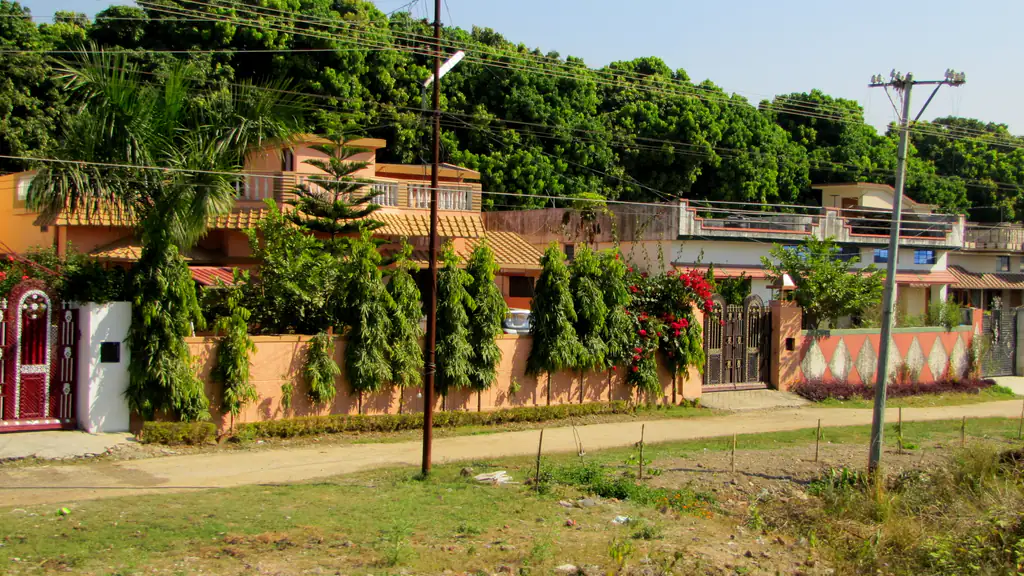
We run a homestay, so read this knowing that. We’ll still tell you when a hotel is the better choice, because a guest who should have booked a hotel isn’t a happy guest anywhere. And the words get mixed up a lot. “Airbnb” is a booking platform, not a type of stay. A home listed there might be a registered homestay, a bed & breakfast, a flat, or sometimes a hotel room. What matters is what the place actually is, and who is responsible for it.
What Uttarakhand’s registration rules mean for guests
In 2026 Uttarakhand brought its old travel-trade rules (2014) and homestay rules (2015) together into one set: the Uttarakhand Tourism and Travel Business Registration Rules, 2026 (reported in May 2026, after cabinet approval). Hotels, guest houses, homestays and bed & breakfasts are all “tourism units” under them, and each has to register with the state tourism department.
Two categories matter most if you’re looking at a home rather than a hotel:
- Homestay. The owner is a permanent resident of Uttarakhand and the family lives in the house. Under the 2026 rules, new homestay registrations are for Nagar Panchayat and rural areas.
- Bed & breakfast. Allowed in towns and cities as well as villages. The owner may or may not live on the premises, and can run it personally or through an authorised operator under a registered agreement.
So a registration tells you a few useful things. Someone has put the place on record with the state. It’s a small unit, not a hotel by another name. And there are rules it has to follow for you. It does not tell you whether the hosts are nice, whether the water is hot, or whether the photos are recent. That part is still up to you to check.
Registration rules, 2026
- Which rules
- Uttarakhand Tourism and Travel Business Registration Rules, 2026. Cabinet-approved; they merge the 2014 travel-business registration rules and the 2015 homestay rules into one set (reported May 2026).ETV Bharat, 20 May 2026, checked 1 Nov 2026
- Size limit
- Homestays and B&Bs: up to 8 rooms and no more than 24 beds in all. Homestays were capped at 6 rooms before.ETV Bharat, 20 May 2026, checked 1 Nov 2026
- Who lives there
- Homestay: the owner or family lives on the premises. B&B: the owner may or may not live there, and it can be run through an authorised operator under a registered agreement (as summarised by Airbnb for hosts; ETV Bharat, 20 May 2026, reports the same operator rule).Airbnb Help Centre: Uttarakhand (summary of the 2026 Rules), checked 1 Nov 2026
- How long it lasts
- Five years for all tourism units, then renewed online by self-renewal, the tourism secretary said in May 2026.ETV Bharat, 20 May 2026, checked 1 Nov 2026
- Registered homestays
- More than 5,000 across Uttarakhand, the state tourism secretary said in May 2026.ETV Bharat, 20 May 2026, checked 1 Nov 2026
What a registered place owes you
Airbnb’s own help-centre summary of the 2026 rules, written for hosts in Uttarakhand, lists duties that you will notice as a guest. A registered unit should:
- Display its registration certificate, with a QR code issued by the Uttarakhand Tourism Development Board, in a common area.
- Keep a complaint and suggestion book, and give you a detailed bill and receipt.
- Keep a visitor register and collect ID from guests.
- Display women’s safety information, including the 112 emergency number and the local police station’s number.
- Not ask you for tips or commissions beyond its stated charges.
The ID part surprises some people, so here it is plainly. Every place that takes paying guests keeps a guest register, and asks for a government ID. If anyone in your group is a foreign national (OCI cardholders included), the Bureau of Immigration’s Form C portal said (as of 1 November 2026) that the place must report the stay on Form C; Airbnb’s guidance for India puts the deadline at 24 hours from check-in. Carry passports and visas. A host who never asks for ID isn’t doing you a favour.
How booking-platform fees work
If you book a home on a platform, the price you see is not always the price the host set. Airbnb, for example, explains two fee structures on its help centre. Under the older split fee, you pay a guest service fee on top of the host’s price. Under the newer single fee, the host pays the whole fee and you see one price. Airbnb says it is moving all home hosts to the single fee, so for a while you may meet both.
Fees and taxes, as of November 2026
- Guest service fee (split fee)
- 14.1% to 16.5% of the booking subtotal (nightly price plus host fees, before taxes). Shown in the price breakdown before you book.Airbnb Help Centre: service fees, checked 1 Nov 2026
- Single fee
- Most hosts pay 15.5%, deducted from their payout; no separate guest service fee. Airbnb says the split fee is being phased out.Airbnb Help Centre: service fees, checked 1 Nov 2026
- What the search price includes
- Fees are included in the price shown; depending on where you are, taxes may only appear at checkout.Airbnb Help Centre: how pricing works, checked 1 Nov 2026
- GST on rooms
- 5% (without input tax credit) on accommodation valued up to ₹7,500 per unit per day, from 22 September 2025. Ask any place whether GST is included in its quote.PIB: FAQs on 56th GST Council decisions, 16 Sep 2025, checked 1 Nov 2026
None of this makes a platform a bad choice. The fee pays for things that matter to some guests: one place to pay, a help line, and a refund process. For example, if something goes wrong during a stay, Airbnb asks guests to start a cancellation or refund request within 72 hours of finding the problem. Just compare the full price at checkout, with taxes and cleaning fees, not the number on the search page.
Homestay, hotel or platform listing: the honest version
| Hotel | Homestay or B&B | Home on a platform | |
|---|---|---|---|
| Good for | One night in transit, late arrivals, people who want room service | Families, small groups, longer stays, people who want local advice | Comparing many options in one place, paying through the platform |
| Someone on site | Usually a front desk | Depends: the family lives there in a homestay; ask at a B&B | Depends on the listing; ask |
| Space | A room | Rooms plus a sitting room, often a kitchen | Anything from a room to a flat |
| Cooking | Rarely | Often a kitchen or home food; ask | Read the listing |
| Price you see | Room rate plus GST | The host’s rate plus any GST | Check the total at checkout |
| Watch for | Small rooms, little local feel | House rules, fewer services | Unregistered listings, old photos, remote hosts |
Choose a hotel if you’re passing through for one night, arriving very late without warning, or want food and help at any hour. A homestay with hosts who don’t live on site can’t give you that, and ours can’t either.
Choose a homestay or B&B if you’re a family or a small group, staying three nights or more, or want a kitchen and a sitting room rather than two hotel rooms down a corridor. It also suits people who want to ask a local what to do with a free afternoon.
Book through a platform if paying through a third party and having its help line matters more to you than the fee. That’s a fair choice. Just check the registration the same way you would for a direct booking.
What to check before booking any homestay
- Registration. Ask which category it is registered in, homestay or B&B, and ask to see the certificate. A registered host won’t mind.
- Who you’ll meet. Does someone live there, nearby, or in another city? Who answers the phone at 9 pm?
- The total price. Ask for it in writing, with breakfast, extra guests and taxes, before you pay anything.
- Cancellation. Get the policy in writing, with a date, not “flexible”.
- Winter and power. From December to February the nights here are cold. Ask how the rooms are heated. If backup power matters to you, ask about that directly.
- Parking. If you’re driving up, ask where the car goes. Not every house in the city has room for one.
- House rules. Quiet hours, smoking, pets, visitors. Better to know before than argue after.
- Recent photos. Ask for a photo or short video taken this month if the listing looks old.
Advice from two people who live here
Plan around the calendar more than the stay type. December is busy: the IMA passing out parade (expected around Saturday 12 December 2026, not yet announced; see our IMA parade page for where to check), Christmas on Friday 25 December and New Year’s Day on Friday 1 January 2027 all bring visitors. If your dates are fixed, decide early, wherever you stay. A home with two or three rooms has less to go round than a hotel.
If you’re in Dehradun for a few days and want to do Mussoorie, Rishikesh or Haridwar as day trips, a base with a kitchen and parking makes the coming and going easier. If you’re going straight up to the hills the next morning, a hotel for one night is the simpler choice. Use the Clock Tower, the ISBT or the railway station as reference points when you compare places on a map, and ask any host how long the drive really is at the hour you’ll arrive.
Where Fyonli Nest fits
Fyonli Nest is registered with Uttarakhand Tourism as a bed & breakfast. We call it a homestay on this site because that’s the word most guests search for. We’re Shalini Kala and Aarushi Sharma, two friends from Dehradun. We don’t live in the house. We live ten minutes away and meet you at the gate. Our Instagram bio says it well: “Step into the slow, nostalgic charm of Old Dehradun.”
- Two bedrooms, the green room and the red room, each with a king bed. It sleeps 4 adults, or up to 6 guests with children aged 2–12.
- A living room with an indigo arch, teak furniture, and a courtyard that catches the morning sun.
- A full kitchen, fast Wi-Fi, a desk, and heaters in winter. Parking is in the courtyard.
- A pahadi breakfast on request: mandua roti, aloo and seasonal fruit, ₹350 per guest per morning. Tell us the night before.
- Check-in from 2 pm, check-out by 11 am, quiet after 10 pm, no smoking indoors. Dogs are welcome; tell us beforehand.
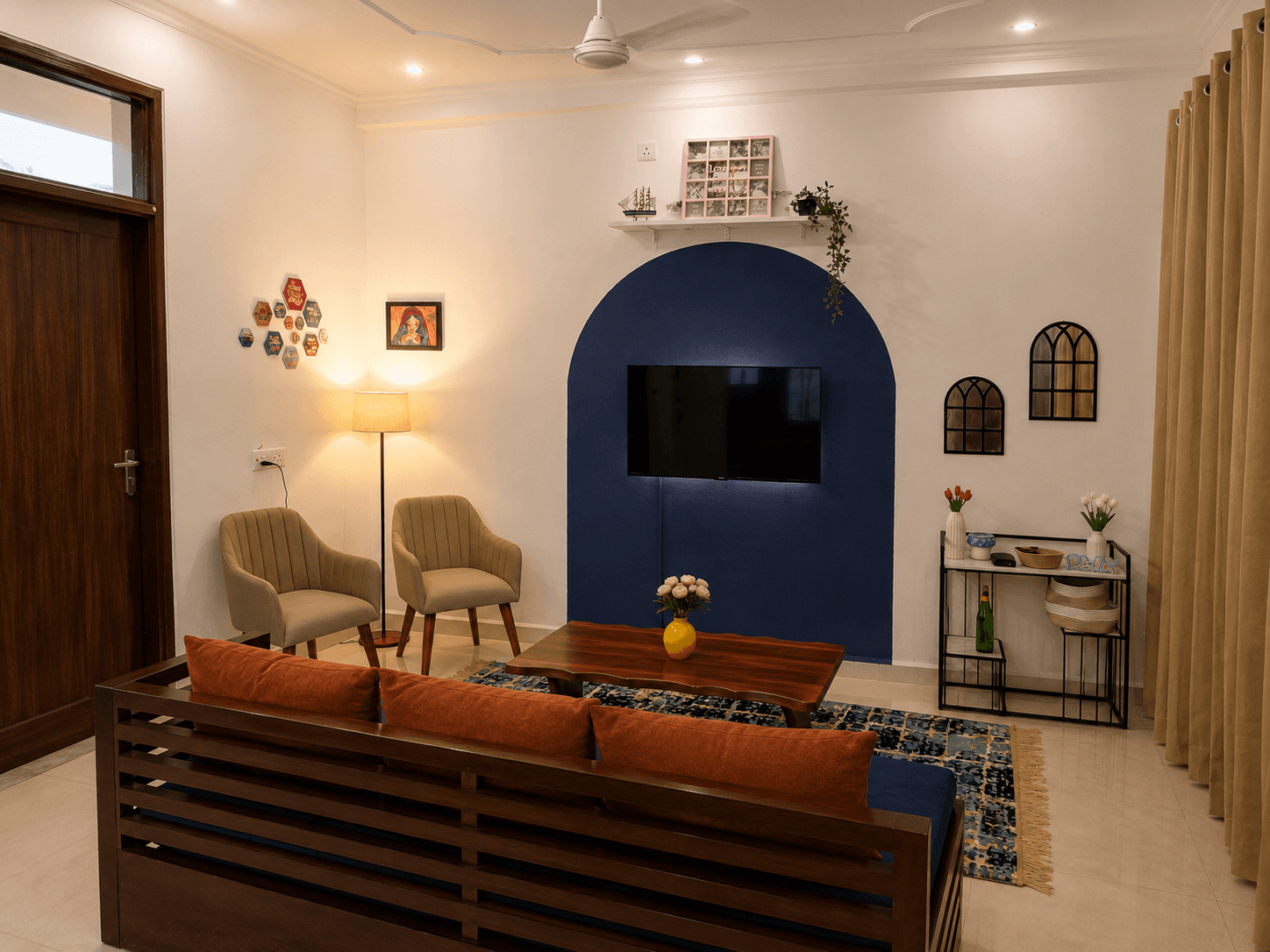
What we are not: a hotel. There’s no front desk, and we don’t live on site. If you need someone downstairs at all hours, book a hotel, and we mean that. If a home with a kitchen and two hosts close by sounds right, send us your dates on WhatsApp or through the request form on our stay page. We confirm on WhatsApp, there’s no payment until we do, and cancellation is free until 7 days before arrival. Or ask us your questions first.
As we put it on Instagram: “We help our guests to experience the best of local places.” Ask us what to pair with what, and what to skip on a short trip.
Sources: ETV Bharat (20 May 2026): Uttarakhand homestay scheme revised; Uttarakhand Tourism: Tourism and Travel Business Registration Rules, 2026 (PDF); Airbnb Help Centre: Uttarakhand (summary of the 2026 rules for hosts); Bureau of Immigration: Online Form III (Form C) notice; Airbnb Help Centre: foreigner registration (FRRO) for hosts in India; Airbnb Help Centre: service fees; Airbnb Resource Centre (29 July 2026, updated 13 October 2026): simplifying service fees; Airbnb Help Centre: how pricing works for homes; Airbnb Help Centre: cancelling during your stay; PIB (16 September 2025): FAQs on the 56th GST Council decisions; Fyonli Nest on Instagram.