
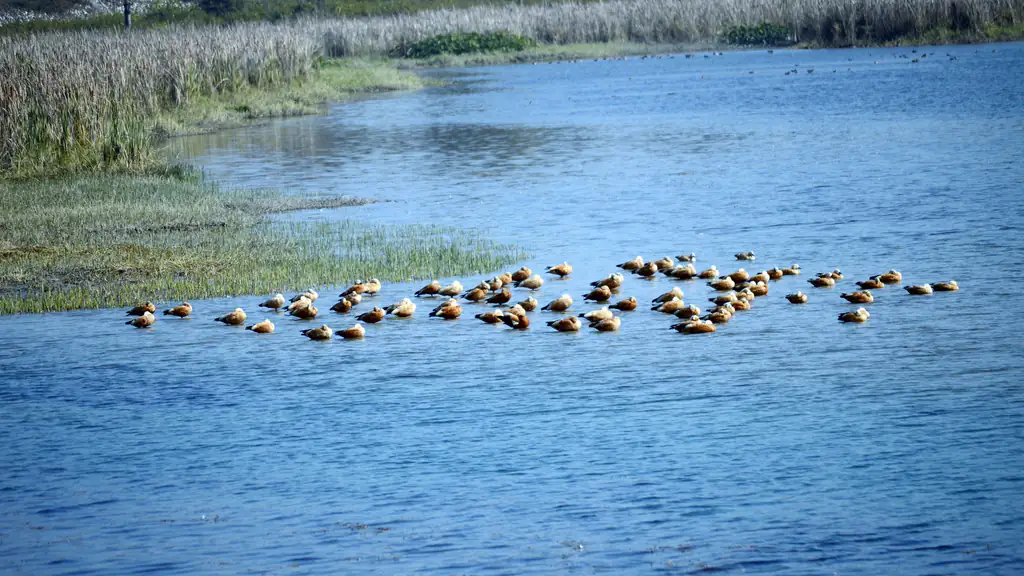
The Asan Conservation Reserve is a 444-hectare stretch of the Asan river, running down to where it meets the Yamuna, in Dehradun district. The barrage was built in 1967. Silt piled up behind the dam wall over the years, and those shallows, islands and reed edges are what the birds come for. The lake behind the barrage is also called Dhalipur Lake.
It was listed as a Ramsar site, a wetland of international importance, on 21 July 2020. The Ramsar listing credits it with 330 bird species, including the critically endangered red-headed vulture, white-rumped vulture and Baer’s pochard. It also says more than 1% of the regional populations of two waterbirds use it: the red-crested pochard and the ruddy shelduck. The water holds 49 kinds of fish too, including the endangered putitor, or golden, mahseer.
Asan Barrage: this season and the basics
- Season so far (2026–27)
- Dainik Bhaskar reported on 27 October 2026 that more than 700 migratory birds had reached the wetland, among them ruddy shelduck, gadwall, Eurasian wigeon and common coot.Dainik Bhaskar, 27 Oct 2026, checked 1 Nov 2026
- First arrivals this winter
- About two dozen ruddy shelducks (surkhab) had arrived by 8 October 2026, Amar Ujala reported, and a forester at Asan said other waterbirds were starting to come in.Amar Ujala, 9 Oct 2026, checked 1 Nov 2026
- How long the migrants stay
- Usually October to March. Dainik Bhaskar puts the departure at around the second week of March; Amar Ujala says March–April.Dainik Bhaskar, 27 Oct 2026, checked 1 Nov 2026
- Last waterbird count
- 5,806 birds of 126 species at Asan in the Asian Waterbird Census on Sunday 18 January 2026. Ruddy shelduck was among the most numerous, at about 983.Times of India, 19 Jan 2026, checked 1 Nov 2026
- Next waterbird count
- The census runs every January and February. The 2027 date for Asan is expected around mid-January, not yet announced.Wetlands International South Asia: AWC, checked 1 Nov 2026
- Watch towers and boating
- As of 8 September 2026, Indian Masterminds reported two forest department bird-watching towers at the wetland, and boating run by GMVN, the state tourism corporation. Amar Ujala also mentioned boating on 9 October 2026. Ask at the gate for the day’s status.Indian Masterminds, 8 Sep 2026, checked 1 Nov 2026
- Distance
- About 40 km by road from the Clock Tower in Dehradun (routed at 42 km on 1 Nov 2026), out west towards Vikasnagar.OpenStreetMap routing, checked 1 Nov 2026
We couldn’t find an official entry fee or opening hours for the reserve. Travel sites print times like 8 am to 6 pm and say entry is free, but none of them cites the forest department, so we’ve left those out. Ask at the gate, and if the boats matter to you, ask GMVN about the day’s boating before you plan around it.
When to go for Asan Barrage bird watching
The ruddy shelducks come first, usually in the first week of October, and the numbers build as it gets colder further north. In October 2025 the first flock of 32 landed on 7 October, a forester at Asan told the New Indian Express. This year the first two dozen or so were in by 8 October. By late October 2026 there were more than 700 migrants on the lake.
For variety, we’d aim for December and January. That is when the January census is held, and it gives you a sense of what a full lake looks like. At the 2026 count the shelducks led the tally, and the New Indian Express reported large numbers of bar-headed geese and greylag geese too. The rarer birds on the list were the steppe eagle and Egyptian vulture (both endangered), Pallas’s fish eagle (endangered), common pochard (vulnerable), and ferruginous duck, river lapwing and woolly-necked stork (all near threatened), according to the Times of India and the New Indian Express.
The Pallas’s fish eagle is the bird many people come for. The forester at Asan told the New Indian Express in 2025 that a pair has nested there every winter for about 60 years, high up in a semal (silk cotton) tree. Look for the white head and the white band on the tail.
From April to September the local birds take over and nest. It is still a wetland worth a look, but the big flocks of ducks and geese are a winter thing.
Birds you might see
Indian Masterminds, reporting on the wetland in September 2026, listed these among the species recorded there, migrants and residents both. It’s a good list to tick off with a field guide:
- Ducks and geese: ruddy shelduck, bar-headed goose, gadwall, Eurasian wigeon, northern shoveler, northern pintail, mallard, green-winged teal, red-crested pochard, common pochard, tufted duck, ferruginous duck, Indian spot-billed duck.
- Grebes, rails and coots: little grebe, great crested grebe, Eurasian coot, Eurasian moorhen, grey-headed swamphen, white-breasted waterhen.
- Waders and herons: common sandpiper, common greenshank, grey heron, purple heron, great egret, woolly-necked stork.
- On the banks: white, white-browed and white-capped wagtails, paddyfield pipit.
Checking eBird before you go
eBird, the Cornell Lab’s birding database, has several hotspots here, so recent sightings are split between them: Asan Conservation Reserve, Assan Barrage and the Asan Conservation Reserve forest trail. Open each one and look at the recent checklists and the bar charts by month. Those tell you more about the week you’re coming than any article can. We couldn’t load eBird’s live totals to quote them here.
Pairing it with Dakpathar
The Dakpathar Barrage is upstream on the Yamuna, built in 1965 to send river water into the canal that later feeds the Asan lake. It is about 20 km from the Asan Barrage by road, on OpenStreetMap’s routing. In October 2025 Jansatta listed the Dakpathar Barrage among the migrants’ favourite stops in the state, and Dainik Jagran said the same that month. We’d treat it as a second look on the same morning, not the main event: Asan is the protected reserve, with the towers and the counts behind it.
How we’d plan a birding morning
We live in Dehradun, so this is our honest version of the day.
- Leave early, but not in the dark. The reserve is about 40 km out of the Clock Tower by road. Sunrise is around 7 am through December, and after 7 from mid-December to the end of January. Leaving around sunrise gets you there in good morning light, while the ducks are still busy.
- Fog is rare here, but check. On IMD’s 1991–2020 averages, Dehradun sees about one foggy day in December and two in January. The morning after winter rain is the one to watch. Look at the IMD Dehradun forecast the night before.
- Bring a flask. Make tea in the kitchen before you leave and take something to eat in the car. Winter mornings are cold, and you’ll be standing still for a while.
- Do the towers first, then walk the edge. Give yourself two or three hours. Midday light is flat and the birds settle down.
- What we’d skip: a weekend afternoon, if birds are the point. Mornings are for birding. If you only have one day in Dehradun, this is a big chunk of it; it works best as one morning of a longer stay.
Binoculars and etiquette
Most of the ducks sit out in the open water, so binoculars are the one thing to bring. An 8x or 10x pair is plenty. Bring one per person if you can; passing a single pair around means someone always misses the eagle. A camera with a long lens helps, but a phone held up to binoculars does surprisingly well for a record shot.
- Keep your voice down. Flocks lift off at shouting and sudden movement, and then they’re gone for everyone.
- Don’t feed the birds, throw things into the water, or walk out onto the mudflats to get closer.
- Skip bird-call playback and drones. Let the birds rest; they have flown a long way.
- Stay on the paths and the bund, and leave the reed edges alone.
- Take your rubbish back with you.
- Upload your sightings to eBird. The January waterbird census itself is submitted through eBird.
Water and weather
This is a working barrage and canal, with gates that release water. Stay back from the edge, the gates and the canal banks, and keep children close. Never go into the water. In the monsoon, rivers in this valley rise fast, and roads out of the city can be hit by landslides and flooding. Birding is a winter visit anyway, but whenever you go, check the IMD Dehradun warnings first. Our page on checking roads and weather lists where else to look.
What’s changing at the wetland
In September 2026, Indian Masterminds reported that the Chakrata Forest Division was turning an old lake at the Forestry Training Centre in Rampur Mandi, inside the Asan wetland area, into a visitor spot. It will have a nature trail around the lake and space for bird watching. Opening is expected around World Wetlands Day in February 2027, not yet announced; we’ll update this page when the forest department confirms a date. The same report said the forest department has trained young women from the Bhoksa tribal community as nature guides. Ask about a guide when you arrive.
Staying in Dehradun for a birding weekend
A winter birding weekend works well from the city. You get one early morning at Asan, and the rest of the days for Dehradun itself. Fyonli Nest is our two-bedroom homestay, with heaters in winter, a full kitchen if you’d like to make your own flask of tea, and parking in the courtyard. If you’d like a slow start the next day, we make a pahadi breakfast on request (mandua roti, aloo and seasonal fruit) for ₹350 per guest per morning. Tell us the night before. See the rooms and send your dates. As we say on Instagram, “We help our guests to experience the best of local places,” so ask us how we’d fit Asan into your days.
Sources: Ramsar Sites Information Service: Asan Conservation Reserve (site 2437); Ramsar: annotated list of wetlands of international importance, India; Times of India, 19 January 2026: Asian Waterbird Census at Asan; New Indian Express, 21 January 2026: 5,800 migrants counted; New Indian Express, 7 October 2025: first ruddy shelducks; Amar Ujala (Hindi), 9 October 2026: first surkhab at Asan; Dainik Bhaskar (Hindi), 27 October 2026: 700 migrants at Asan; Indian Masterminds, 8 September 2026: new lake and nature trail; Jansatta (Hindi), 15 October 2025: migrants at Asan and Dakpathar; Dainik Jagran (Hindi), 11 October 2025: migratory birds in Uttarakhand; Asan Barrage (Wikipedia); Dakpathar Barrage (Wikipedia); Wetlands International South Asia: Asian Waterbird Census; eBird hotspots for the reserve; IMD climatological table, Dehradun (1991–2020); Sunrise-Sunset.org: Dehradun; IMD Meteorological Centre Dehradun; OpenStreetMap routing from the Clock Tower. All checked 1 November 2026.